Knowledge
A Full Breakdown of Different Classifications for AC Power Supply Sockets
When choosing an AC power supply socket for a new product, the first thing to consider is not always the price. The socket needs to fit the panel, match the power requirements, and work reliably in the environment where the equipment will be used. Choosing the right type at the beginning can also save time during assembly and reduce problems after the product is shipped.
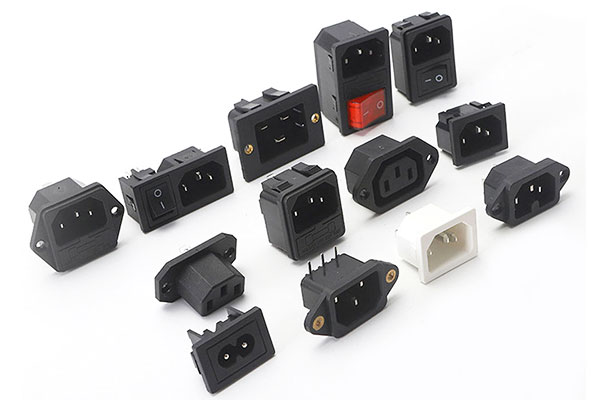
AC power supply sockets can be divided into several types according to their mounting method, connector type, switch function, fuse configuration, and application.
1. Chassis Mount AC Power Sockets
Chassis mount sockets are installed directly on the equipment housing. They are commonly used in power supplies, industrial equipment, audio equipment, computers, and other electronic devices. This type is a practical choice when the power inlet needs to be located on the rear or side of the enclosure.
For buyers, the main point is installation. Before ordering, check the panel cut-out, mounting hole position, and available space around the socket. A correct fit makes assembly easier and avoids modifying the enclosure later.
2. PCB Mount AC Power Sockets
PCB mount sockets are designed to connect directly to the circuit board. They are useful when the power input needs to be connected to the PCB without additional wiring. This can make internal assembly cleaner and reduce the number of separate components.
For mass production, PCB mounting can also help simplify the assembly process. Buyers should check the terminal layout and PCB footprint carefully to make sure the socket matches the board design.
3. AC Power Sockets with Switch
Some sockets combine the AC inlet with an ON/OFF switch. This gives users a convenient way to disconnect the equipment from the power supply without installing a separate switch.
For equipment manufacturers, combining these functions in one component can help save panel space and simplify the front or rear panel design. This type is often found in power supplies, industrial machines, test equipment, and electronic instruments.
4. AC Power Sockets with Fuse Holder
A fused AC power socket includes a fuse holder together with the power inlet. The fuse provides protection against excessive current and can be replaced when necessary.
This design is useful for equipment where overcurrent protection is required. From a buyer's point of view, having the fuse holder built into the socket can make the panel cleaner and reduce the need for another component.
5. IEC AC Power Inlet Sockets
IEC power sockets are widely used on electronic and electrical equipment. Common versions include C14, C20, and other IEC inlet configurations. They provide a standard connection between the equipment and a detachable power cord.
When selecting an IEC socket, buyers should confirm the required connector type, current rating, mounting style, and available space. A familiar standard also makes replacement and cable sourcing easier for end users.
How to Choose the Right AC Power Socket
The best AC power socket depends on the equipment rather than the socket alone. Check the voltage and current rating first, then confirm the mounting method, connector type, fuse requirement, switch option, and panel dimensions.
For manufacturers, product consistency is also important. A reliable supplier can help maintain the same specifications across production batches and provide suitable options when a standard model does not meet the project requirements.
Rucoe offers different AC power socket solutions for electronic equipment and control applications, including various mounting styles and functional configurations. For OEM and ODM projects, customers can discuss their panel layout, electrical requirements, and production needs with the supplier before placing a bulk order.
A good AC power socket should fit the equipment, simplify installation, and provide reliable power connection during everyday use. Spending a little more time on selection can make the production process smoother and help avoid unnecessary changes later.
RELATED NEWS
- Why Do Customers Prefer Right Angle LED Tact Switch 2026-08-24
- Why Choose Metal Push Button Switches with Pre-Wired Cable 2026-07-28
- Why Do Customers Choose Wired Metal Push Button Switches 2026-06-24
- What is a metal push button switch used for 2026-05-19
- The most common problems with DIP switches 2026-04-01
CATEGORIES
LATEST NEWS
CONTACT US
Contact: Bella
Phone: 15999819066
E-mail: rucoe@rucoe.com
Whatsapp:+86-15999819066
Add: Taoyuan Street, Nanshan, Shenzhen