Knowledge
The Complete Guide to Different Types of Tact Switches
Tactile switches, also called tact switches, are small electromechanical switches used in many electronic products and control systems. When the button is pressed, the switch provides a noticeable click or tactile response, letting the user know that the input has been made. Because of their small size and simple construction, tact switches can be found in everything from control panels and audio equipment to consumer electronics and industrial devices.
There is no single type of tactile switch for every application. The right choice usually depends on the PCB layout, installation method, working environment, and whether visual indication is needed. Here are some common types and where they are normally used.
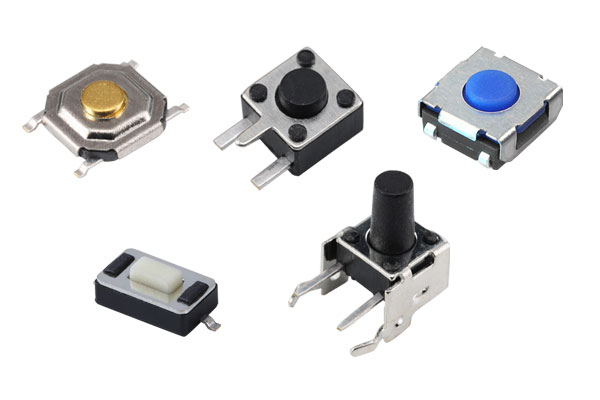
1. Through-Hole Tactile Switches
Through-hole tact switches have leads that pass through holes in the PCB before soldering. This gives the switch a firm mechanical connection and makes this type suitable for applications where the component needs additional support.
They are often used in automotive electronics, industrial equipment, and other products where the switch may experience regular mechanical stress. Through-hole models are also a practical option when the PCB assembly process already uses through-hole components.
2. Surface Mount Tactile Switches
Surface mount tactile switches are soldered directly onto the surface of the PCB. Since they do not require holes through the board, manufacturers can place components more closely together and make better use of available PCB space.
This type is widely used in compact electronic products, including mobile devices, consumer electronics, and small control boards. SMD assembly also works well with automated production lines, which can be an advantage for manufacturers producing large quantities.
PCB mount tact switches are installed directly onto the circuit board and are available in different sizes, heights, and terminal configurations. They are often selected when the button needs to be integrated into the PCB rather than mounted separately to the equipment panel.
Their compact structure makes them useful for audio and video equipment, control boards, electronic instruments, and other products where board space is limited.
Sealed tactile switches are made for applications where the switch may come into contact with dust, moisture, or other environmental conditions. The sealed construction adds protection around the internal parts and helps maintain reliable operation.
These switches are useful for outdoor electronics, industrial equipment, medical devices, and products installed in humid environments. For applications exposed to water or dust, buyers should check the actual protection rating of the selected model rather than choosing based on the word "sealed" alone.
5. Illuminated Tactile Switches
Illuminated tactile switches include an LED or other light source inside the switch. The light can be used to show power status, operating mode, or simply make the button easier to find when the surrounding light is low.
Different LED colors are available for different designs and functions. Depending on the model, illuminated tact switches can be supplied with either surface-mount or through-hole terminals, giving manufacturers more choices when planning the PCB assembly.
Choosing the Right Tactile Switch
Before selecting a tact switch, it is worth checking more than the button size. The mounting method, PCB space, operating force, electrical rating, switch height, terminal type, and working environment can all affect the final choice. If an LED is required, the LED color and electrical requirements should also be confirmed.
For manufacturers, a suitable tactile switch should fit the product design as well as the production process. Looking at these details before ordering can help avoid PCB changes, installation problems, and unnecessary replacement costs.
RELATED NEWS
- Why Do Customers Prefer Right Angle LED Tact Switch 2026-08-24
- Why Choose Metal Push Button Switches with Pre-Wired Cable 2026-07-28
- Why Do Customers Choose Wired Metal Push Button Switches 2026-06-24
- What is a metal push button switch used for 2026-05-19
- The most common problems with DIP switches 2026-04-01
CATEGORIES
LATEST NEWS
CONTACT US
Contact: Bella
Phone: 15999819066
E-mail: rucoe@rucoe.com
Whatsapp:+86-15999819066
Add: Taoyuan Street, Nanshan, Shenzhen