16MM Metal Push Button Switch
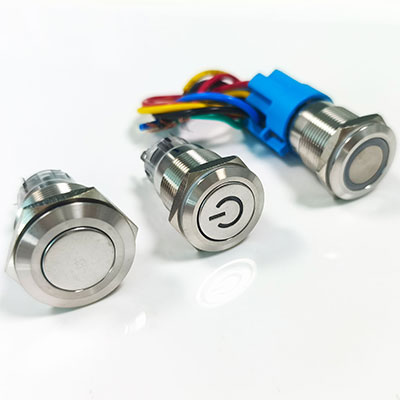
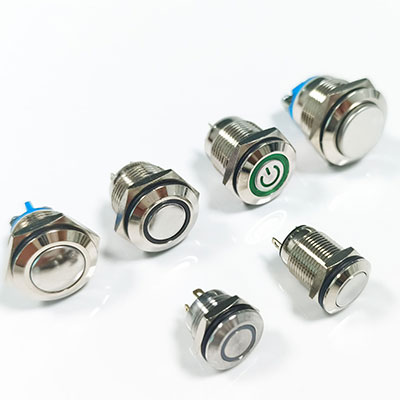
16mm stainless steel pushbutton switch is a panel-mount, anti-vandal type with a flush head.
This 16mm stainless steel pushbutton switch is a panel-mount, anti-vandal type with a flush head. The button sits nearly flush with the panel, which helps reduce accidental operation and keeps the panel surface flat and easy to clean.
The housing is made of one-piece machined stainless steel, suitable for industrial control panels, clean rooms, and areas where oil, chemicals, or cleaning agents may be present. This version has no LED or power symbol. It is available in momentary or latching operation, with 1NO or 1NO1NC contact configurations. Typical use is equipment panels, control cabinets, and industrial control applications where a simple, durable metal pushbutton is required.
2. Specifications
| Cut-out Size | 16mm |
| Head Model | Flat |
| Housing Material | Stainless Steel |
| Operation | Momentary |
| Contact Configuration | 1NO |
| Mounting Method | Panel Mount |
| Typical Environmental | Industrial control panels, clean rooms, areas with oil. |
Electrical rating, terminal type, panel thickness range, and sealing performance should be confirmed against the datasheet or sample approval.
3. Core Selling Points
Flush mounting reduces accidental operation: The button does not protrude much from the panel, which is useful for equipment where knocks, bumps, or accidental presses are a concern.
Stainless steel housing: A practical choice for clean rooms, oil-contaminated areas, and equipment exposed to cleaning agents.
No LED circuit: Fewer internal components and no separate light-circuit wiring. This can reduce cost and simplify maintenance for non-illuminated applications.
Momentary or latching selectable: One product family can cover trigger/reset signals or maintained contact requirements, depending on the chosen version.
IK10 impact resistance: Designed for industrial panels that receive frequent or rough manual operation.
Simple, flat panel appearance: The flush head keeps the panel surface level and avoids the protrusion of high-head or domed buttons.
4. FAQ
Q1: Should I choose momentary or latching?
A: Choose momentary if the button only needs to output a trigger pulse—press to close, release to open—such as for a control board input or reset signal. Choose latching if the contact must stay closed after pressing and release only on the next press, such as for maintaining a small-power control circuit. Confirm the operation type in the order.
Q2: What is the difference between this non-illuminated flush version and the 16mm version with power symbol/LED?
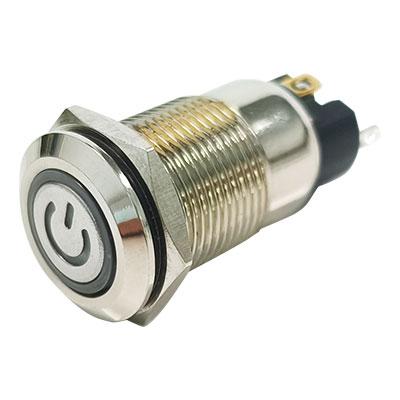
A: This version has no LED and no panel marking. It has a simpler internal structure and no light-circuit wiring, which suits applications where indication is not needed. The LED/power-symbol version provides a ring indicator and a power icon on the panel, but requires separate LED voltage and wiring confirmation.
Q3: Why choose a flush head instead of a high-head or domed button?
A: A flush head sits nearly level with the panel, reducing accidental presses from objects or clothing and making the panel easier to clean. A high-head or domed button is easier to locate by touch, but it protrudes more and may be more likely to be knocked.
Q4: Is stainless steel necessary compared with plastic buttons?
A: Stainless steel is suitable for panels exposed to oil, chemicals, cleaning agents, or rough operation, and it provides IK10 impact resistance. Plastic buttons are lower in cost and provide insulation, but they are generally less resistant to scratching, aging, and harsh cleaning environments. The final choice depends on the panel environment and cost target.
INQUIRY


CATEGORIES
LATEST NEWS
CONTACT US
Contact: Bella
Phone: 15999819066
E-mail: rucoe@rucoe.com
Whatsapp:+86-15999819066
Add: Taoyuan Street, Nanshan, Shenzhen